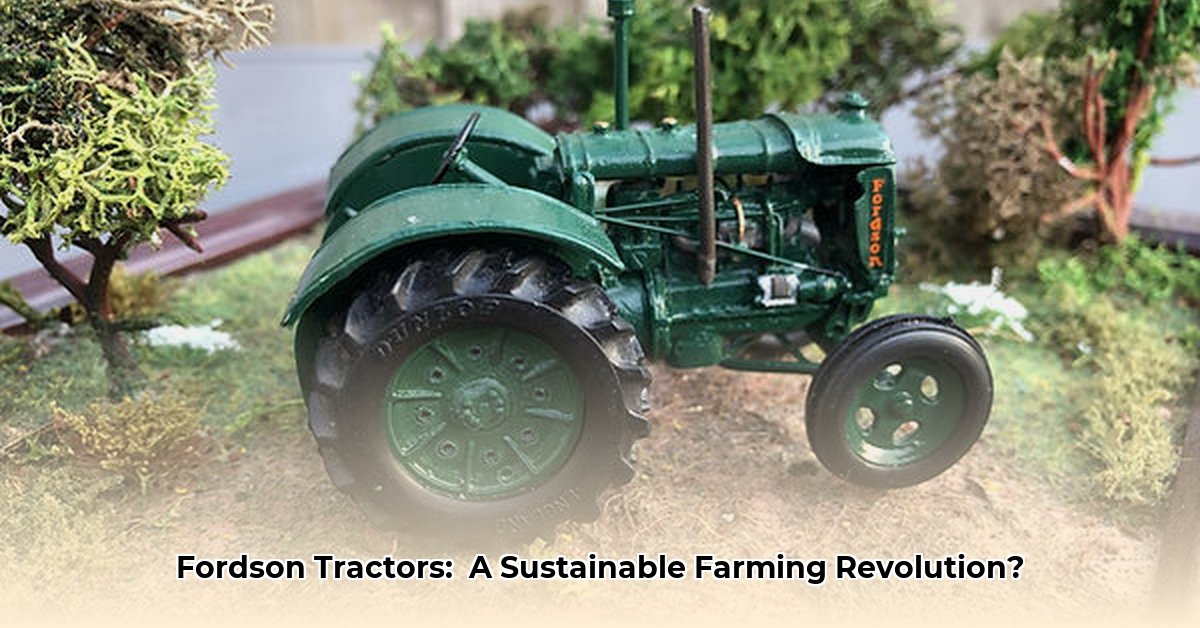
The rumble of a Fordson tractor—a sound synonymous with agricultural revolution—echoes through the 20th century. This isn't simply a story of increased productivity; it's a nuanced narrative of technological advancement, unforeseen consequences, and the ongoing debate surrounding sustainability. For more information on Fordson tractors, see this Fordson Tractor Toys page. This article delves into the Fordson's complex legacy, examining its impact on farming practices and the environment, from its initial introduction to its enduring influence on modern agriculture.
Early Days: A Revolution in the Fields
Before the Fordson, farming was a labor-intensive affair, reliant on horses and manual labor. The Fordson's arrival, however, marked a paradigm shift. Its relatively low cost and ease of use, compared to existing tractors, made it accessible to a wider range of farmers. This accessibility translated into significantly increased cultivation efficiency. A single farmer could accomplish the work of a team, dramatically boosting crop yields. Did this mechanization lead to immediate and widespread soil erosion, as some early critics suggested? Further research is needed to fully assess these early impacts. This increase in efficiency, however, came with a cost. The Fordson's gasoline engine, while revolutionary, consumed substantial fuel, raising early environmental concerns. Increased land cultivation and fuel consumption translated into heightened pressure on natural resources.
Evolution and Consolidation: Bigger, Better, and…More Complex?
The Fordson wasn't static. Subsequent models incorporated improvements in efficiency, design, and features. The eventual merger with Ford Motor Company fostered standardization and economies of scale, resulting in cheaper production and readily available parts—a boon for farmers. However, this consolidation also raised questions. Did the standardization lead to a reduction in agricultural diversity, potentially hindering the adoption of more sustainable practices? The answer remains complex and requires further investigation. While readily available parts enhanced reliability and reduced downtime, research is needed to understand whether this also limited experimentation with more environmentally friendly alternatives.
The Long-Term Impact: A Balancing Act
The Fordson's legacy is far from straightforward. Increased food production undoubtedly fed a growing global population. However, its contribution to soil erosion and increased reliance on fossil fuels cannot be ignored. The tractors fundamentally altered agricultural landscapes, shifting from labor-intensive farms to mechanized operations. The environmental consequences remain a primary focus of ongoing historical research. Did the increase in food production outweigh the potentially significant environmental impact? This point is still debated among experts. One could argue that the increased efficiency enabled the larger-scale farming that enabled a growing global population to be fed, a benefit that might not be apparent in purely environmental assessments.
Lessons for Modern Sustainable Farming: Learning from the Past
The Fordson's history provides essential insights for contemporary sustainable agriculture. It serves as a cautionary tale, underscoring the need for careful consideration of the long-term environmental and social ramifications of technological advancements. The path of least resistance is not always the most environmentally sound. How can we learn from agricultural innovations of the past to create more holistic approaches that balance food production with environmental stewardship?
Modern Context: A Call for Sustainable Solutions
The Fordson's legacy highlights the ongoing need to develop sustainable agricultural practices that meet the demands of the growing global population while minimizing environmental damage. This necessitates a multi-pronged approach, emphasizing fuel-efficient machinery, precision agriculture (utilizing technology to optimize resource use), and improved land management techniques. The Fordson’s history underscores the complexity of balancing increased efficiency with environmental responsibility.
Actionable Insights for the Future
To fully understand the Fordson's impact, further research is crucial. Key areas for investigation include:
- Fuel Efficiency Across Models: Detailed fuel consumption data for various Fordson models operating under different conditions would allow for a comprehensive comparison of their fuel efficiency across time and variation.
- Soil Degradation Correlation: Long-term soil health data from farms using Fordson tractors, compared to those that did not, would allow researchers to examine the correlation between tractor use and soil degradation.
- Labor Displacement Analysis: Analyzing farm labor statistics from the era of Fordson adoption, while adjusting for other socio-economic factors, could shed light on the impact on farm employment.
- Technological Advancements in Sustainability: A critical examination of innovations designed to mitigate the environmental impact of tractors, both then and now, allows an assessment of the effectiveness of these approaches.
The Fordson's story isn't concluded. Its impact continues to be analyzed, debated, and re-evaluated as new data emerges and research methodologies advance. Understanding its complex legacy is vital for advancing towards a more sustainable approach to food production and agricultural innovation.